
What does it mean to be a Reggio-Emilia Inspired
Early Childhood Program?
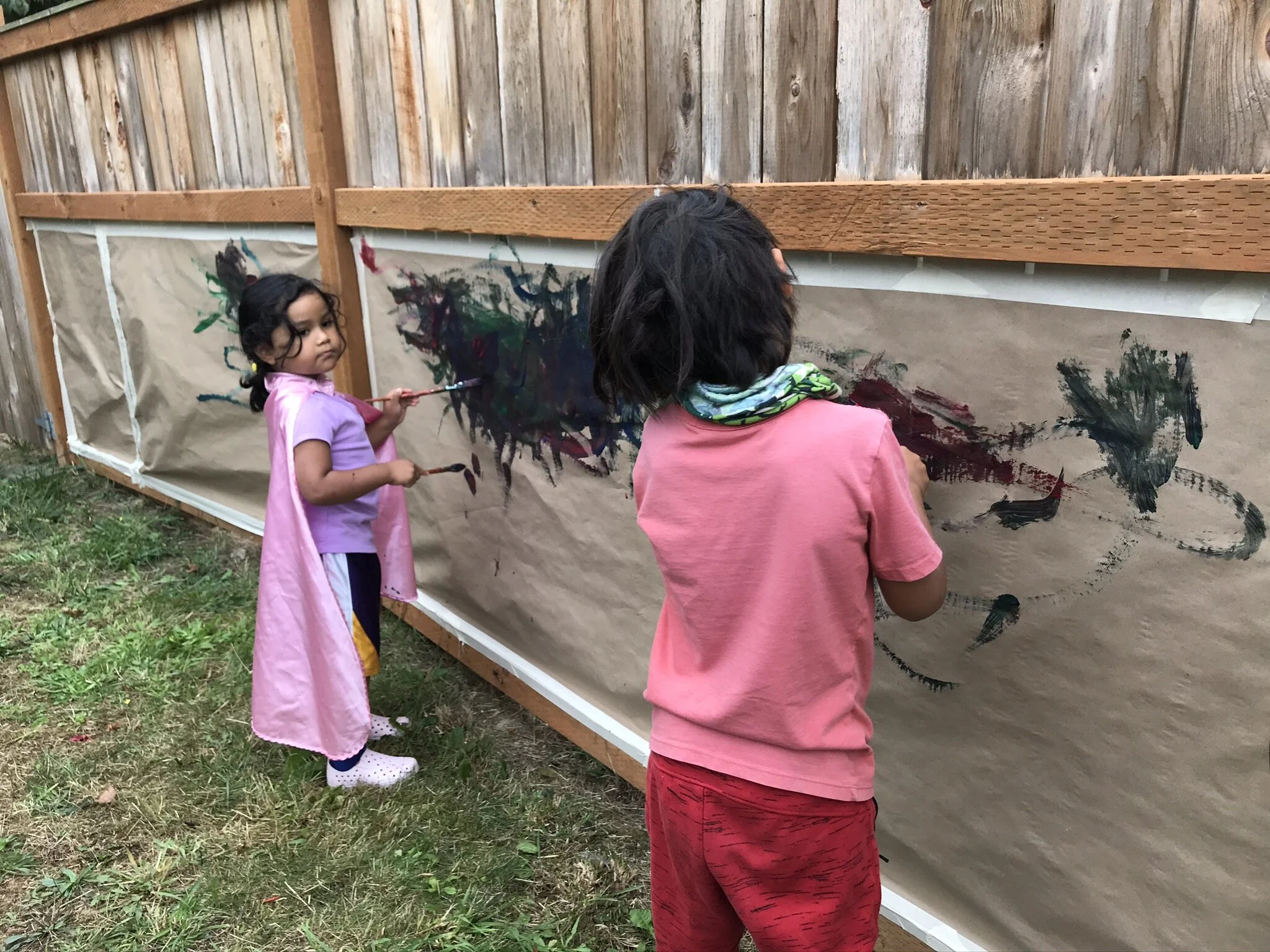
Reggio-Emilia-Inspired Approach
The Reggio Emilia-inspired approach is an early childhood education philosophy that views children as capable and curious learners who are active participants in their own education. It emphasizes an emergent curriculum driven by children's interests, a rich learning environment considered the "third teacher" alongside families and educators, and multiple forms of expression known as the "100 languages of children". Teachers act as collaborators who document children's work to foster deep inquiry and reflection.

Core Principles
Child-centered learning: The curriculum emerges from children's interests and questions, rather than following a rigid, predetermined structure.
The "third teacher": The learning environment is carefully designed to be rich, beautiful, and inviting, encouraging exploration and discovery.
The "100 languages of children": Children are encouraged to express their knowledge and ideas through diverse forms of expression, such as drawing, building, writing, and dramatic play.
Collaboration and relationships: The approach values collaboration between children, teachers, and families, viewing learning as a social process.
Documentation: Teachers observe and document children's learning through notes, photos, and videos to make their thinking visible, to reflect on the process, and to plan future activities.
Active role of the teacher: Teachers are seen as co-learners and researchers who observe, listen to, and guide children's inquiries rather than simply instructing them.
Time for exploration: Children are given ample time to engage in in-depth projects and develop a deep understanding of topics.